
Signs You Need a New Garage Door, Not Another Repair
Sometimes a repair is the right call. Sometimes it's just delaying the inevitable. Here's how to honestly tell the difference before you spend money on a door that's already on its way out.
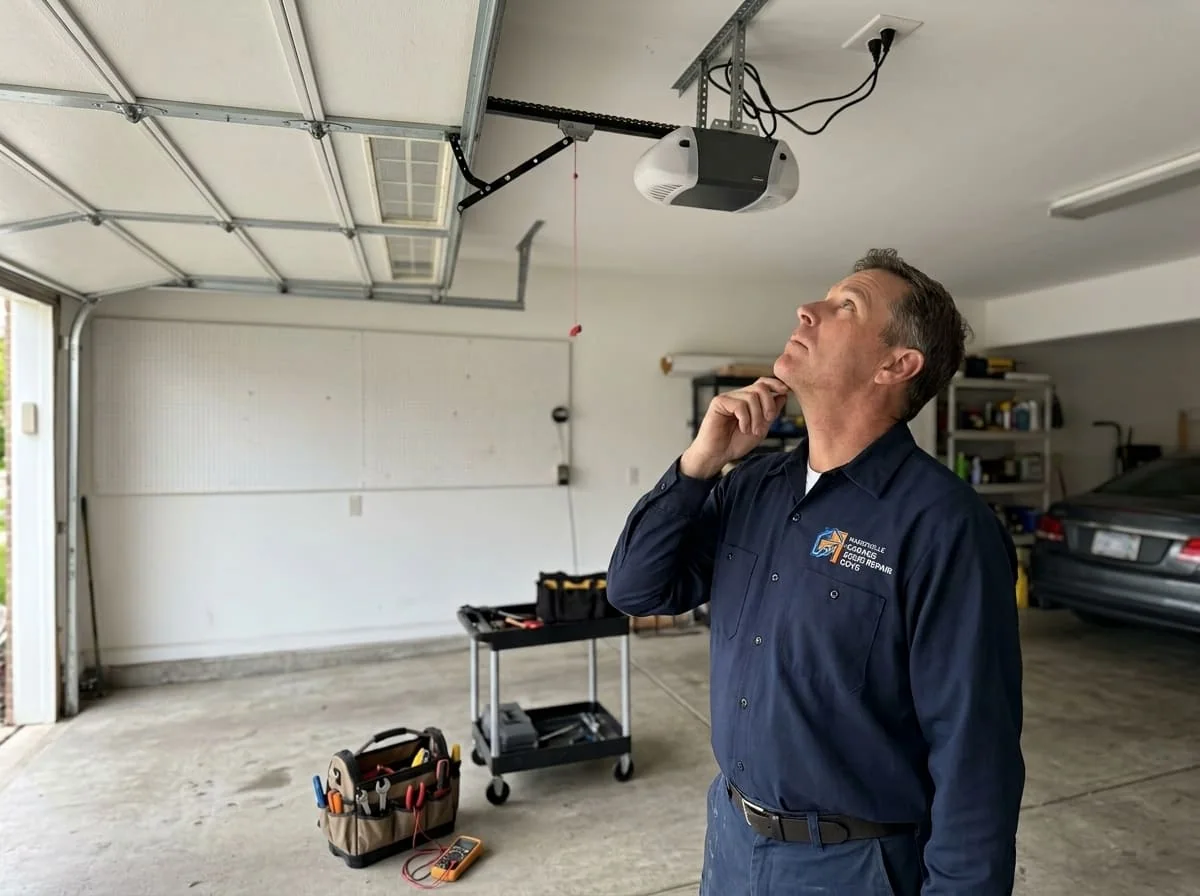
When a Repair Call Turns Into a Replacement Conversation
Most calls we get are straightforward repairs: a broken spring, a bad sensor, a roller that finally gave out. We fix it, the door works like it should, and that's the end of it. But a few times a month, I'm standing in someone's garage in Naperville or Plainfield looking at a door where the honest answer isn't "let's fix this one thing" — it's "this door has told you it's done, and the next repair is just a down payment on the one after that."
That's not a sales pitch. I'd rather talk a homeowner out of a premature replacement than talk them into one they don't need yet. But there's a real, recognizable pattern to doors that are past the point where repair makes sense, and after fourteen years doing this work across the western suburbs, I can usually spot it within the first few minutes of looking at a door and its track system. This article walks through what that pattern actually looks like, so you can make the call yourself before you're standing in your driveway with a technician.
None of this is about pushing a sale. It's about not spending money patching a door that's structurally or mechanically past its useful life, when that money is better put toward a door that will give you another fifteen to twenty years of trouble-free use.
How Old Is Too Old? Cycles, Not Just Years
Age alone doesn't tell the whole story, but it's a real factor. Most residential sectional garage doors are built around a torsion spring system, and those springs are rated in cycles — one cycle being one full open-and-close — under standards referenced by DASMA (the Door and Access Systems Manufacturers Association), including ANSI/DASMA 102 and DASMA's TDS-190 technical data sheet on spring cycle life. A standard-duty residential spring is typically rated somewhere in the 10,000-cycle range. If your household opens the garage door four times a day, that's roughly 1,460 cycles a year — which puts a standard spring's realistic service life somewhere around seven to ten years under normal use, sooner if the door gets opened and closed more often than that, or if it's regularly left open during bad weather.
The spring itself is replaceable on its own, and a spring failure alone is rarely a reason to replace the whole door. But a door that's 20-plus years old has usually accumulated wear well beyond the springs: the panels have flexed through thousands of temperature swings, the hinges have stretched their mounting holes, the track has been adjusted and re-adjusted more than once, and the steel or wood in the panels themselves has fatigued in ways that don't show up until something finally lets go. When a door hits that age and starts needing a second or third unrelated repair within a year or two, that's the point where I start talking replacement instead of another patch.
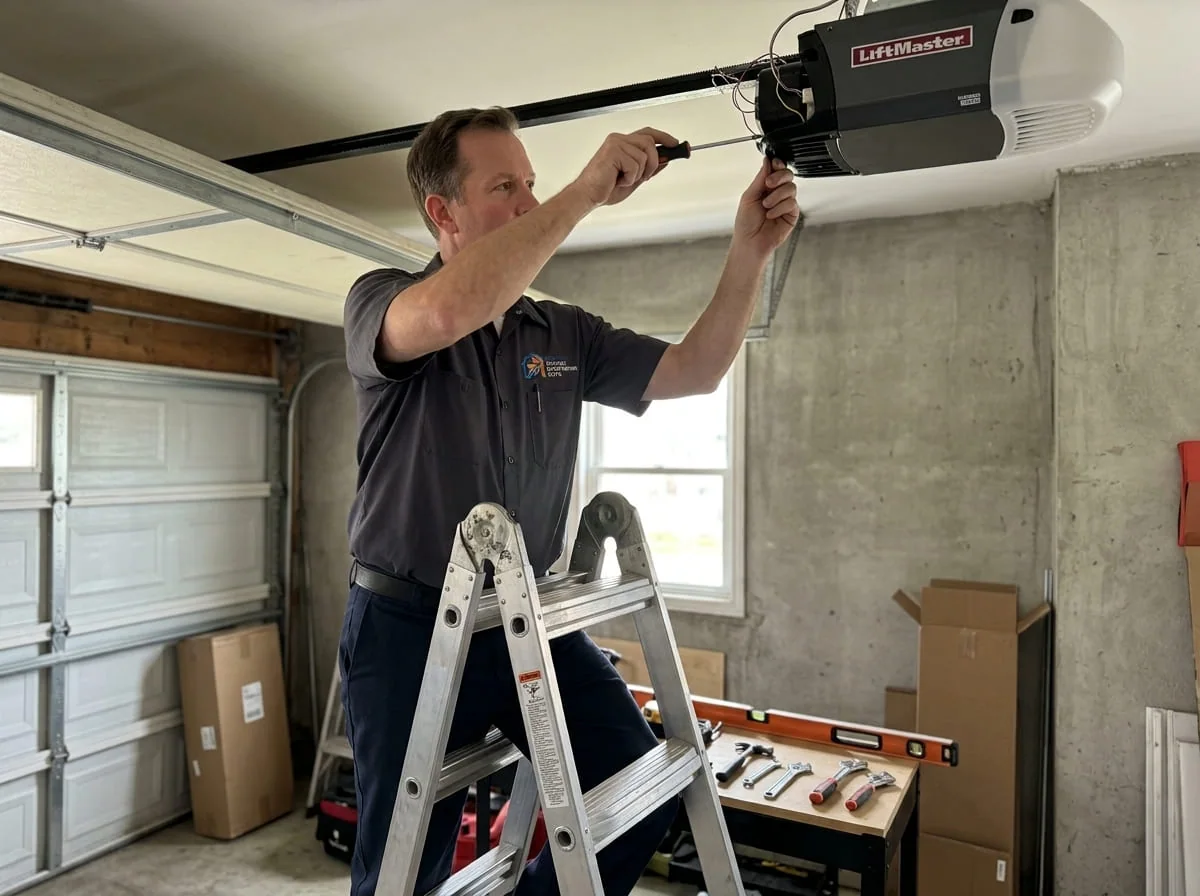
Visible Structural Damage You Can't Repair Around
Some damage is cosmetic. Some damage tells you the door's structural integrity is compromised, and no repair fixes that — you can only replace the affected panel, or the whole door if the damage is widespread enough.
- Rust that's gone past surface level. Illinois winters mean road salt, moisture, and freeze-thaw cycles working on any exposed steel. Surface rust on hardware is normal and treatable. Rust that's bubbled or flaked through the panel itself, especially near the bottom section where snowmelt and slush sit against the door, means the steel has thinned and lost strength.
- Warping or bowing panels. Wood doors especially can warp from moisture absorption, and steel panels can bow if insulation foam has degraded or if a panel absorbed an impact. A warped panel puts uneven stress on the track and opener every single cycle.
- Cracking, especially in older wood or composite doors. Once a panel cracks, water gets behind the surface layer and the damage accelerates fast, particularly through a Naperville winter.
- Dents that have compromised the panel seams. A dent that's just cosmetic is one thing. A dent that's pulled a seam open or misaligned how panels stack against each other affects the whole door's function.
If damage is confined to a single panel and the rest of the door is sound, panel replacement is often the right, less expensive fix — worth asking about before assuming you need a full replacement.
The Door Fights Its Own Tracks and Rollers
A door that jumps its track once, gets fixed, and never does it again isn't a red flag. A door that comes off track repeatedly, even after the track has been realigned and the rollers replaced, is telling you something more fundamental is wrong — usually that the door itself has warped slightly out of true, or that the track has been bent and re-bent enough times that it no longer holds alignment the way it should.
Same goes for a door that binds or drags at the same spot on every cycle even after lubrication, roller replacement, and track adjustment. When we've addressed rollers, track alignment, and spring balance and the door still doesn't move smoothly, that's usually the door's frame or panel geometry, not a fixable component. Chasing that with repeated service calls costs more over a year or two than most people expect, and it never actually resolves — it just gets adjusted back to "acceptable" until it drifts again.
Your Energy Bill Is Telling You Something
Older, uninsulated garage doors — especially single-layer steel doors common in homes built through the 1990s — do very little to buffer the garage from outdoor temperatures. In a Naperville winter, with January highs averaging around 30°F and lows near 16°F, an attached garage with a poorly insulated door can run close to outdoor temperature, which pulls down the temperature of any adjacent living space, especially rooms above the garage. That translates into your furnace working harder and a noticeably colder wall or floor in the rooms nearby.
Modern insulated doors use polyurethane or polystyrene core insulation with a rated R-value, and the difference in how a garage feels — and how much it affects the rest of the house — is significant. If your current door is a thin single-layer panel with no insulation, and you've noticed the garage feels like an extension of the outdoors in January, that's a legitimate, non-cosmetic reason to consider replacement, separate from any repair issue. ENERGY STAR publishes general guidance on insulation and home energy efficiency worth reviewing if you're weighing this.
The Same Noise Keeps Coming Back
A noisy door is usually fixable — worn rollers, a dry chain, loose hardware, or an unbalanced spring account for most of the grinding, popping, or banging we get called out for. We cover the common causes in detail elsewhere, but the pattern worth flagging here is specific: if you've had a noise issue diagnosed and repaired, and the same noise returns within a few months, more than once, that's usually not a sign the repair was done wrong. It's a sign the underlying wear is coming from a source that keeps regenerating the symptom — panel flex, a slightly bent track, or hardware that's stretched past the point where tightening holds.
One repair for a noise complaint is normal. A third repair for the same noise, on the same door, within a year is the point where I'd rather have an honest conversation about the door's overall condition than keep billing for the same fix.
Safety Systems That Won't Hold a Fix
This one matters more than the others. Modern garage doors rely on photo-eye safety sensors and auto-reverse mechanisms that stop and reverse the door if something is in its path — a federal safety requirement the U.S. Consumer Product Safety Commission has published extensive guidance on, given how much force a garage door door exerts and the injury risk from doors that don't reverse properly. If your sensors have been realigned, cleaned, and replaced, and the door still doesn't reliably stop and reverse when it should, or if the auto-reverse force feels inconsistent test to test, that is not a component to leave in a "mostly working" state.
On an older door, sometimes the issue isn't the sensors themselves but the opener's ability to properly integrate with them, or wiring that's degraded inside a door old enough that its original electrical components are no longer well supported. When safety systems can't be reliably restored to full function, replacing the door and opener together is the responsible call, not a repeated patch.
Doing the Math Honestly: Repair vs. Replace
I won't give you a dollar figure here — every quote depends on the door size, materials, and what's actually wrong, and we always provide a free, upfront quote before any work starts so you're never guessing. But the decision framework is simple and worth walking through honestly:
| Signal | Usually still worth repairing | Usually worth replacing |
|---|---|---|
| Age | Under 12–15 years, single issue | 20+ years, or multiple issues stacking up |
| Damage | Isolated to one component or panel | Structural — rust-through, warping, cracked panels |
| Repeat repairs | First time addressing this issue | Same symptom, third repair in under two years |
| Safety systems | Sensor/reverse issue resolved and holding | Won't hold a fix after multiple attempts |
| Insulation | Door insulated, garage stays reasonable in winter | Single-layer door, garage runs near outdoor temp |
If you're landing mostly in the left column, a repair is the right call and we'll tell you that directly. If you're landing in the right column on two or more rows, replacement is very likely the more cost-effective path over the next five to ten years, even though it costs more up front than a single repair visit.
What I Actually Check on a Free Inspection
When we come out for what starts as a repair call and it looks like it might be a replacement conversation, here's what I actually walk through before saying so out loud:
- Panel condition on all sections, not just the one showing visible damage — checking for rust-through, soft spots, and delamination on insulated doors
- Track straightness and how cleanly the door travels through a full cycle by hand with the opener disengaged
- Spring type, approximate age if known, and whether the cycle count is consistent with remaining life
- Hinge and roller wear across every joint, not just the ones making noise
- Whether the safety sensors and auto-reverse function hold consistently across multiple test cycles
- How the door and its current insulation level fit the rest of the home's heating and cooling
That inspection is free, and it comes with a straight answer — repair, or replace, and why. If it's a repair, we'll do it right and stand behind the work. If it's a replacement, we'll walk you through door types and options with no invented pricing games, just an honest quote based on what your home actually needs.

Pete Voss
Owner and lead technician at Naperville Garage Door Repair Guys, serving Naperville, IL since 2012.
FAQs
How do I know if it's cheaper to repair or replace my garage door?
It depends on the door's age, what's actually broken, and whether the problem is isolated or part of a pattern of repeat issues. A single spring or sensor repair on a door under 12–15 years old is almost always the cheaper path. A door with structural damage, or one that's needed the same repair more than twice in two years, usually costs more in the long run to keep patching. We provide a free, honest inspection and upfront quote so you can compare both options with real numbers for your specific door, not a generic estimate.
Can I just replace one panel instead of the whole door?
Often, yes. If the damage is confined to a single panel — a dent, isolated rust, or an impact from a car or falling branch — and the rest of the door's panels, track, and hardware are in good condition, panel replacement is a legitimate and less expensive option. It gets more complicated on older doors where the exact panel style is no longer manufactured, which is something we check before recommending it.
How long should a garage door actually last?
A well-maintained residential garage door commonly lasts 20 to 30 years structurally, though components wear out on their own schedules within that window. Torsion springs are rated in cycles under DASMA standards and typically need replacing every 7 to 10 years under average use. Rollers, hinges, and cables have their own wear timelines. The door panels and frame usually outlast several rounds of hardware replacement, until age-related fatigue or structural damage changes that math.
Is it dangerous to keep using a garage door with a safety sensor issue?
Yes, this is one area where we don't recommend waiting. Auto-reverse and photo-eye sensors exist specifically to stop the door from closing on a person, pet, or object, and the CPSC has published extensive safety guidance on why this matters. If sensors have been serviced and the issue keeps recurring, or the door doesn't reliably reverse across repeated test cycles, treat that as a priority repair or replacement, not something to defer.
Will a new garage door actually lower my energy bills?
An insulated door will noticeably reduce how much outdoor temperature transfers into the garage, which matters most if you have living space above or adjacent to the garage, or store items sensitive to temperature swings. In a Naperville winter, the difference between an uninsulated single-layer door and a modern insulated one is significant in how the garage itself feels. It won't replace attic or wall insulation as your biggest energy factor, but it's a real, measurable improvement, and ENERGY STAR's general efficiency guidance covers the broader picture well.
Do I need a permit to replace a garage door in Naperville?
Generally, swapping an existing door for a new one on the same structure doesn't require a separate permit, but rules can vary depending on whether any framing changes are involved. We recommend confirming specifics with the City of Naperville's Permits & Licenses division before major work, since that's the authority on current requirements, not something we'd want to state as a blanket legal fact.
Have a Garage Door Problem Right Now?
Skip the guesswork — call Naperville Garage Door Repair Guys for a fast, honest diagnosis.