
Garage Door Panel Replacement in Naperville, IL
A dented, cracked, or rusted-through panel doesn't always mean a whole new door. We match and replace individual panel sections so your garage door looks right and operates safely again.
- Locally owned since 2012
- Insured, background-checked techs
- Free upfront quotes
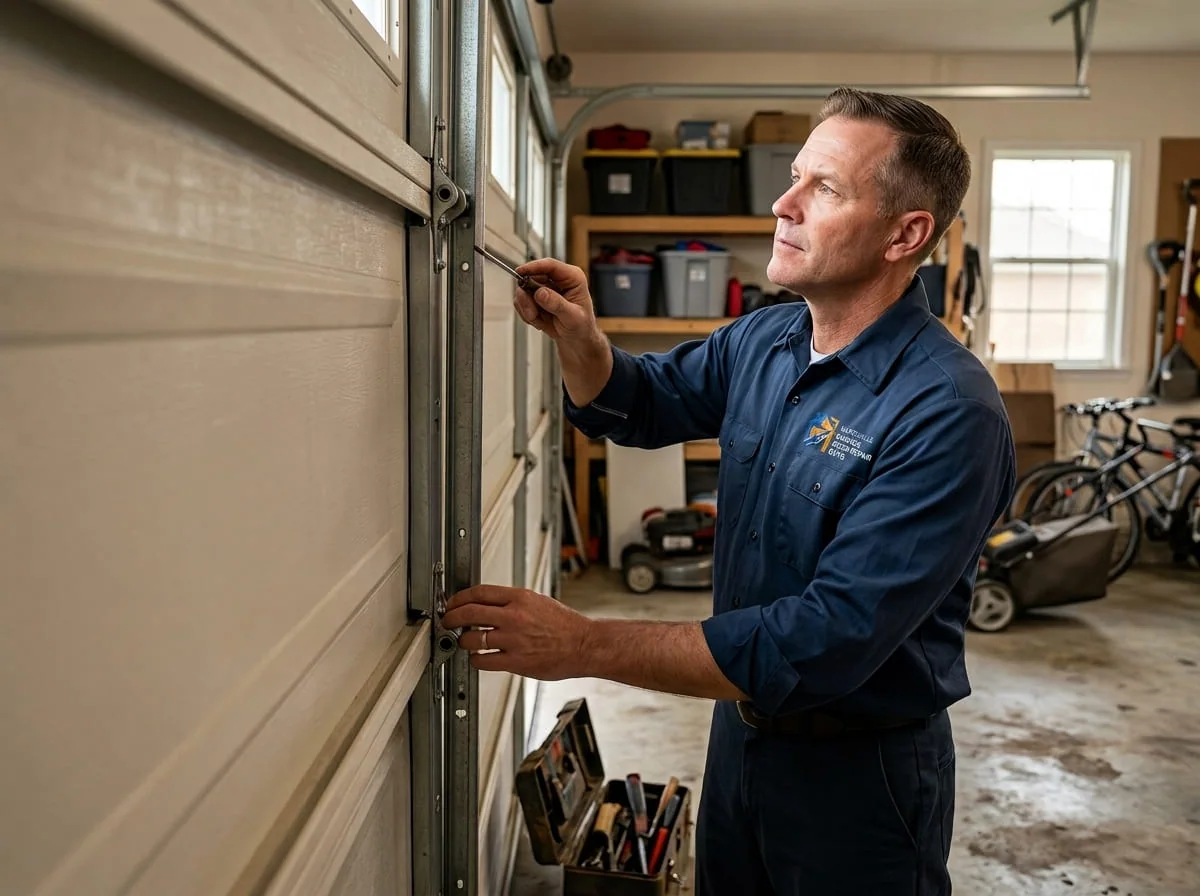
A dented, cracked, or rusted-through garage door panel is one of the most common calls we get across Naperville and the western suburbs, usually after a car clips the door backing out of a tight driveway, a stray basketball connects with a section at just the wrong angle, or a winter's worth of road salt and snowmelt finally eats through the bottom panel. Most sectional garage doors are built from four or five separate panel sections joined by hinges, so on many doors a single damaged section can be unbolted and replaced without swapping out the entire door.
Panel replacement isn't as simple as ordering a random matching-sized section and bolting it on, though. Each panel has to match its neighbors in width, height, and insulation type, and for street-facing doors, in color and grain pattern too. It also has to carry its share of the door's total weight correctly against the torsion spring system overhead. A replacement panel that's even slightly heavier or lighter than the one it replaces can throw off spring balance, which shows up later as an opener straining to lift the door or a door that won't hold steady halfway open.
Naperville's winters make panel damage worse than it looks at first glance. Freeze-thaw cycles work into an existing crease and widen it, road salt tracked off driveways and cul-de-sacs in neighborhoods like White Eagle and Ashwood Park accelerates rust at the bottom panel where snowmelt sits longest, and cold makes steel more brittle right where a dent has already weakened it. What starts as a cosmetic ding in November can be a structural problem by February.
Signs Your Garage Door Needs a Panel Replacement
Not every scratch or scuff means a panel has to come off, but certain kinds of damage rarely improve on their own:
- A dent or crease deep enough that it won't push back out, especially where the crease has cracked the paint or primer coat
- Daylight visible at a seam between two sections, usually meaning a panel has warped or a hinge has pulled loose
- Rust holes or heavy pitting near the bottom panel, where road salt and snowmelt sit against the steel longest
- The door drags, binds, or pops off the track right where the damaged section rides, a sign the panel is bent enough to fight the rollers
- A cracked or shattered window insert set into one of the panels
If the drag or binding shows up specifically where a damaged panel meets the track, that's usually a panel problem rather than a track problem, though the two can look similar from the driveway.
How Panel Replacement Works
The first step is identifying exactly what panel your door needs. Most sectional doors carry a manufacturer's data plate or stamp on the end stile or the back of a panel noting the model series, section height, and sometimes the insulation type. We use that to source a matching section rather than guessing from measurements alone, since even a close visual match can be off in thickness or weight if it comes from a different production run.
Once the correct panel is on hand, the door is secured in place, the damaged section is unbolted from the hinges and end stiles, and the new panel is set in, aligned to the track, and re-hung. If your door's springs are already near the end of their cycle life or slightly out of adjustment, we'll flag that during the same visit, since a fresh panel installed on an already unbalanced door won't stay aligned for long.
For doors with window inserts, we match the glazing style as closely as possible, though older insert styles are sometimes discontinued, which we'll tell you upfront rather than after the part is ordered.
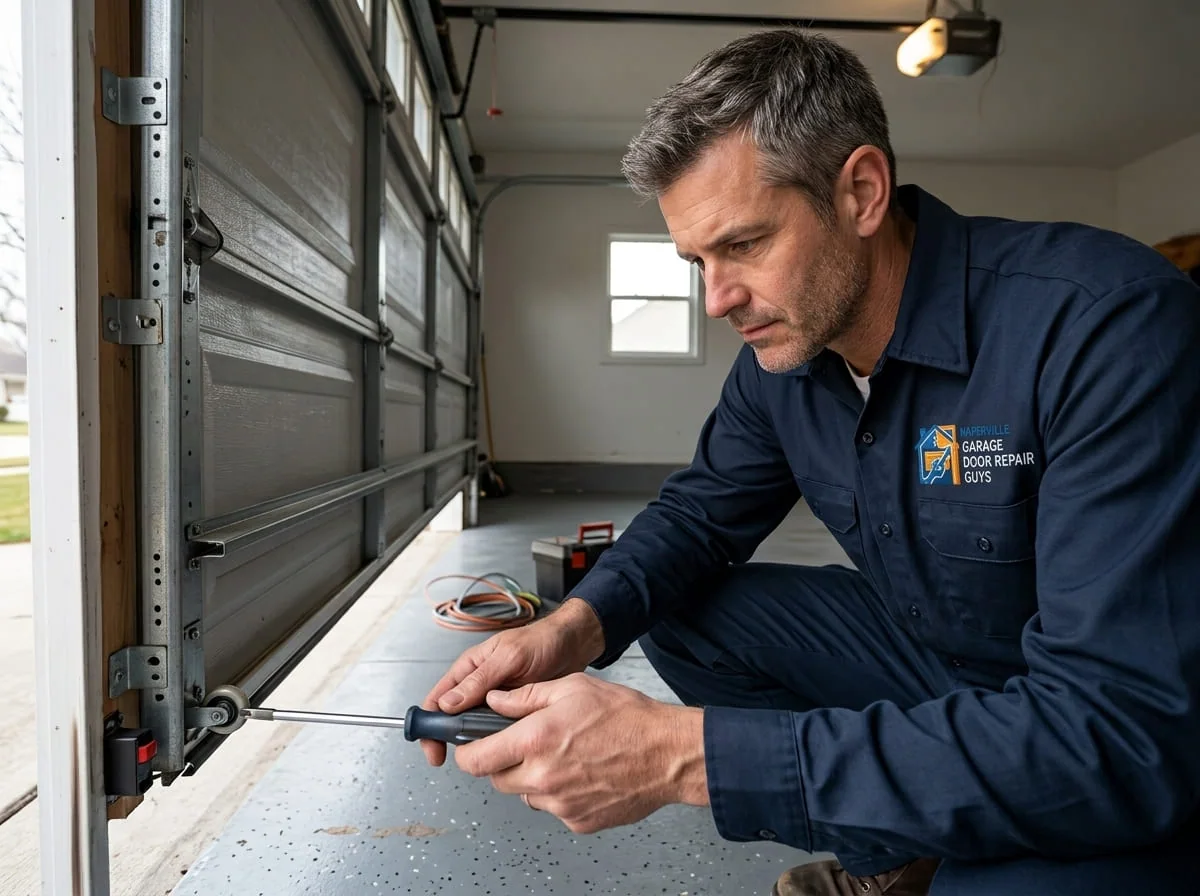
Replacing a Single Panel vs. Replacing the Whole Door
Whether a single panel replacement makes sense depends mainly on your door's age and how many sections are damaged. Doors under roughly a decade old usually still have their panel profile available from the original run, which keeps a single-section swap straightforward. Older doors sometimes have a discontinued profile, meaning even a well-matched replacement panel will look slightly different from the surrounding sections, especially in color, since factory finishes fade unevenly with years of sun exposure.
If more than one or two panels are damaged, or the door has already had multiple repairs over the years, it's often worth comparing the cost of another single-panel patch against a full garage door replacement. We'll walk you through both options honestly during the inspection rather than defaulting to whichever is more profitable for us, and we provide a free quote either way before any work begins.
Why DIY Panel Swaps Are Riskier Than They Look
A garage door panel isn't just a cosmetic piece bolted to the front of the door. Every section carries part of the door's total weight against the torsion spring system, and pulling a panel off an assembled door without properly securing the section above it can let the door shift or drop unexpectedly. On doors with extension springs instead of torsion springs, the panels near the bottom also connect to the safety containment cables the Consumer Product Safety Commission recommends on every extension spring system, and disconnecting those incorrectly removes a safety feature that's there for a reason.
Beyond the spring risk, a panel that's even slightly out of alignment with its neighbors will bind against the rollers and track every time the door cycles, which strains the opener's drive gear and can shorten its life well before the panel itself fails again.
How Naperville-Area Weather Affects Damaged Panels
Cold winters that dip to average lows near 16°F make steel more brittle exactly where a dent has already stressed the metal, so a crease that seemed stable in October can crack further by January. Freeze-thaw cycles common across the Chicago suburbs also shift concrete slabs slightly over time, which can nudge a damaged panel further out of alignment with the track.
Road salt is the bigger long-term threat to panels specifically. Homes on sloped driveways throughout Naperville and Plainfield see salt-laden snowmelt run straight down toward the bottom panel and pool there, and that panel is almost always the first to show rust-through on an older door. Humid summers with July highs near 84°F then trap moisture in any existing dent or scratch, giving rust a head start once the paint layer is broken.
Why Naperville Homeowners Choose Us for Panel Replacement
We've been repairing and replacing garage door panels across Naperville and the surrounding suburbs since 2012, and our technicians are insured and background-checked. Owner Pete Voss started the company running a single truck and still believes in explaining exactly what's wrong with a door before touching it, rather than upselling work nobody asked for.
We quote panel replacement upfront once we've identified your door's exact profile, and we offer same-day appointments where possible so a dented or rusted-through panel doesn't sit exposed to the weather any longer than it has to.
What to Expect When You Call
On-site inspection and free quote
Our technician examines the damaged panel, checks the door's data plate for the exact profile, and gives you an upfront price before ordering any parts.
Panel matching and ordering
We match the replacement section by width, height, insulation type, and color as closely as the original profile allows.
Careful removal and installation
The door is secured, the damaged panel is unbolted from its hinges and end stiles, and the new section is set in and aligned to the track.
Balance and alignment check
We test the door through several full cycles to confirm the new panel tracks smoothly and hasn't thrown off the spring balance.
Final walkthrough
We show you the completed repair and point out anything else worth watching, like fading that may make future panels harder to match.
Garage Door Panel Replacement in Naperville, IL FAQs
Can I replace just one damaged garage door panel, or do I need a whole new door?
Usually just one panel, especially if your door is under about ten years old and the panel profile is still available. We confirm this during a free on-site inspection before quoting anything.
How long does a garage door panel replacement take?
Most single-panel replacements are completed in one visit once the matching section is on hand, typically within one to two hours.
Will the new panel match the color and style of my existing door?
We match the profile and color as closely as possible, but sun fading on the older panels sometimes creates a slight visible difference, which we'll point out honestly before installing anything.
Is a dented or rusted garage door panel dangerous?
It can be. A dented section can throw off how the door's weight is distributed against the torsion springs, and a rusted-through panel loses structural strength right where it needs to flex with the door.
Can I replace a garage door panel myself?
We don't recommend it. Panels carry part of the door's weight against spring tension, and removing one incorrectly on an assembled door can cause it to shift or drop unexpectedly.
How much does garage door panel replacement cost?
Cost depends on your door's age, whether the original panel profile is still available, insulation type, and how many sections are damaged. We provide a free, upfront quote before any work begins.
What usually causes garage door panels to get damaged?
Vehicle impacts backing out of the driveway, hail and windblown debris, sports equipment like basketballs, and road salt corrosion eating through the bottom panel over several winters are the most common causes we see.
Need Panel Replacement in Naperville, IL?
Naperville Garage Door Repair Guys is ready to help — call now for a free, upfront quote.