
Garage Door Repair in Naperville, IL
Springs, cables, tracks, rollers, or openers — our technicians diagnose the actual mechanical problem and repair it correctly the first time, with upfront pricing you see before any work begins.
- Locally owned since 2012
- Insured, background-checked techs
- Free upfront quotes
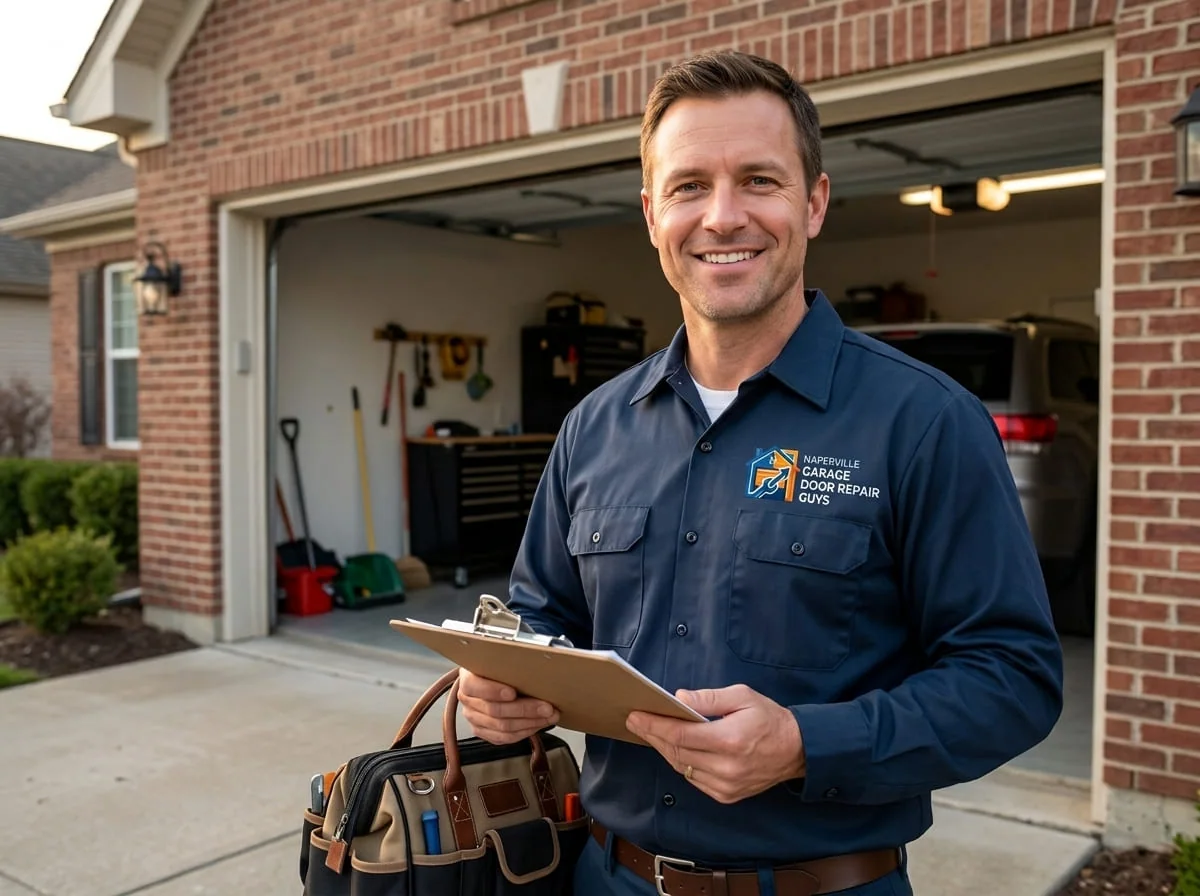
A residential garage door is usually the heaviest moving object in a house, and when the spring, cable, track, or opener that manages that weight fails, the door stops behaving predictably. Sometimes that failure is gradual, like a rusted cable slowly fraying. Sometimes it's sudden, like a torsion spring letting go with a bang loud enough to hear from the driveway. Naperville Garage Door Repair Guys diagnoses the actual cause before recommending any fix, whether that turns out to be a stretched extension spring, a cable off its drum, a bent track rail, or an opener logic board that lost its programming after a power blip.
Naperville's climate puts real, measurable stress on these systems. Winter mornings that dip toward 16°F cause torsion springs to contract and lose a portion of their working tension, which is a big part of why spring failures cluster on the coldest days of the year instead of happening gradually. The same cold snaps make track bolts, hinges, and rollers bind as metal contracts, and repeated freeze-thaw cycles can shift a concrete slab just enough to throw a track out of alignment. Warm, humid summers bring the opposite problems — thickened opener lubricant, swollen wood panels, and dust working its way into roller bearings.
Pete Voss started this company in 2012 after years spent installing doors on new-construction homes across the western suburbs, and the crew he's built since still runs on the rule he set on day one: explain what's actually wrong before touching anything. We serve Naperville and the surrounding communities — including Plainfield, Bolingbrook, Woodridge, Lisle, Aurora, Wheaton, Warrenville, Oswego, and Downers Grove — with background-checked, insured technicians and upfront, honest pricing on every repair.
Signs Your Garage Door Needs Repair
Most garage door problems announce themselves before a full breakdown, if you know what to watch and listen for. A door that's suddenly noisy, uneven, or slow to respond is usually telling you exactly which component is failing.
- The door opens or closes unevenly, with one side sitting lower than the other — often a sign of a broken or unwinding torsion spring, or a cable that has slipped off its drum.
- Loud bangs, pops, or grinding sounds during operation, which can point to a snapped spring, worn rollers, or metal binding against a bent track.
- The opener motor runs but the door doesn't move, or the door reverses right after touching the floor — frequently a misaligned safety sensor or a slipping drive gear.
- Visible rust, fraying, or gaps in the lift cables, especially near the bottom brackets.
- The door feels unusually heavy when you lift it by hand with the opener disengaged, which almost always means the springs have lost tension and stopped carrying their share of the weight.
Any one of these is a reason to stop using the door and schedule an inspection rather than wait for a complete failure, which can trap a vehicle inside or burn out an opener motor trying to force a jammed door.
How Our Garage Door Repair Process Works
A repair call starts with a full inspection, not a guess. Our technician checks spring tension and wear, cable condition, track alignment, roller and hinge condition, and opener function as a system, because a problem in one part often causes symptoms in another — a worn roller can look like a track problem, and a failing opener capacitor can look like a spring problem.
Once we know what's actually wrong, you get a plain-language explanation and an upfront quote before any repair work starts. There's no obligation to move forward on the spot. If you approve the repair, most single-component jobs — a spring, a cable, a section of track, an opener part — are completed in the same visit, and we test the door's balance and full range of motion before we consider the job finished.
Why DIY Garage Door Repair Is Risky
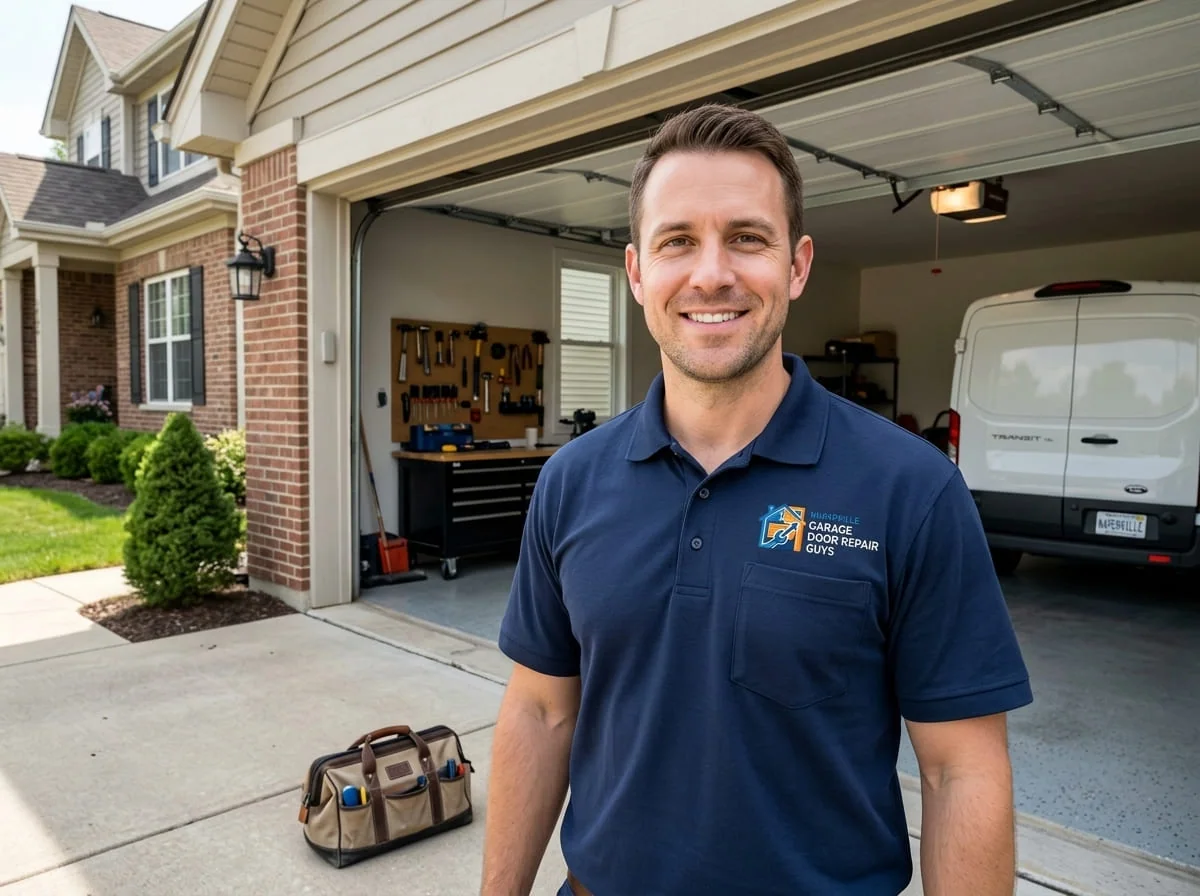
Torsion springs store enormous mechanical energy under tension, and releasing or adjusting one with the wrong tools or technique can cause serious injury. Pete Voss, our owner, still keeps a mangled winding bar in his toolbox from a job where a homeowner's DIY torsion spring adjustment ended with a trip to the emergency room — it's why he insists spring and cable work be done strictly by the book, every time.
Extension springs carry their own risk profile. The U.S. Consumer Product Safety Commission has documented enough extension-spring injuries that safety containment cables are now standard guidance for that system, precisely because a spring under load can become a projectile if it fails without one. Cables under tension present a similar hazard, and misjudging track alignment or opener force settings can lead to a door that slams shut instead of closing gently. None of this is a reason to panic about your garage door — it's a reason to have tension-bearing components serviced by someone trained to handle them.
How Naperville-Area Winters Affect These Repairs
Naperville sees genuinely cold winters — January mornings averaging near 16°F — and that cold is one of the most common reasons we get repair calls between December and February. Torsion springs are engineered to a rated number of open-close cycles, and DASMA's technical guidance on spring cycle life notes that cold temperatures reduce a spring's effective working tension, which is why a spring that's handled thousands of cycles without issue can suddenly snap on a subzero morning. Doors left open in cold weather, or cycled repeatedly during a cold snap, tend to wear through their remaining cycle life faster than the same door would in mild weather.
Freeze-thaw cycles are the other seasonal factor specific to this area. As the ground and slab shift slightly through repeated freezing and thawing, a track that was perfectly aligned in October can develop a subtle bind by February. It's a good reason for a pre-winter tune-up rather than waiting for a failure on the coldest day of the year.
Why Naperville Homeowners Choose Us
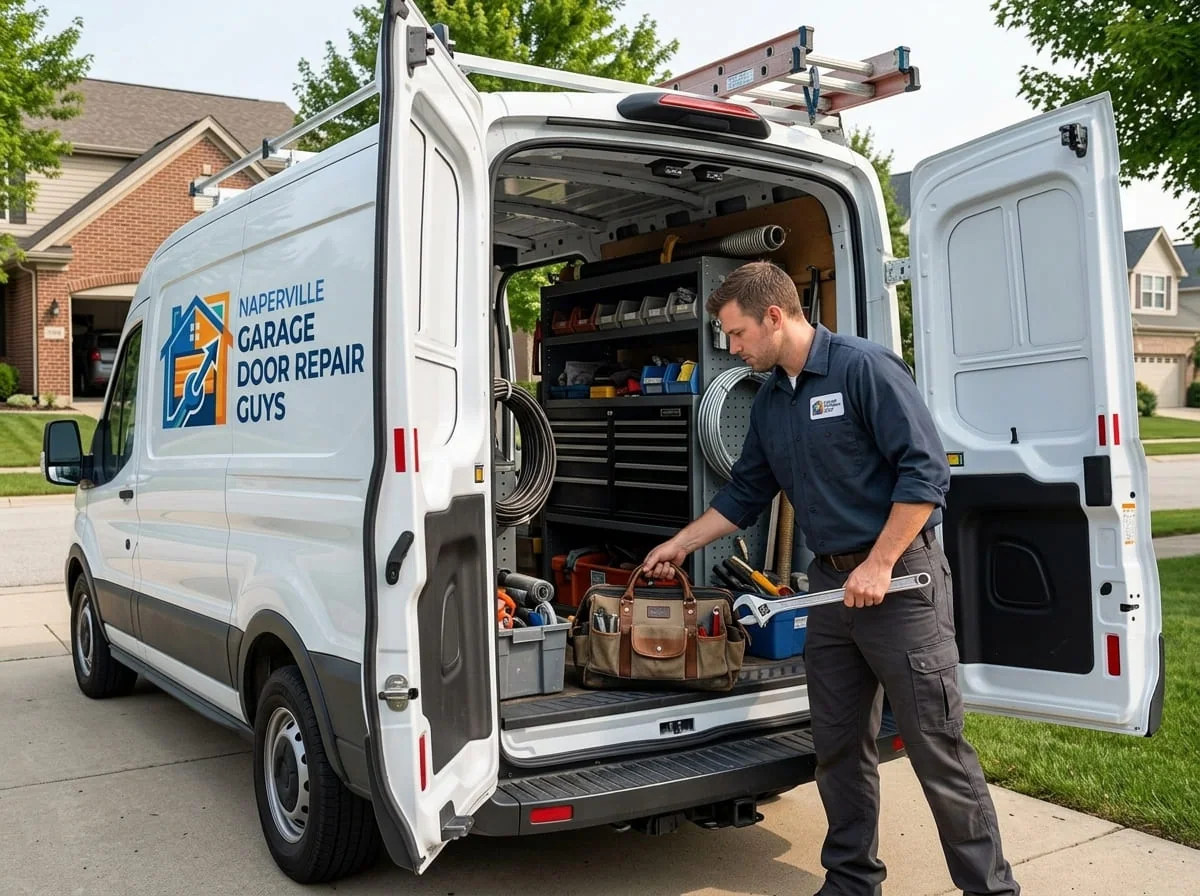
We've been repairing garage doors across Naperville and the western suburbs since 2012, and every technician on our team is background-checked and insured. We explain what's actually broken before we recommend a fix, we quote the job honestly before starting work, and we don't consider a repair finished until the door is balanced and tested.
Same-day appointments are available where possible, and if you call after hours, we return those calls first thing the next business day rather than leaving you wondering. That's the same standard Pete Voss set running this company solo out of one truck back in 2012, and it's the standard the whole crew works to now.
What to Expect When You Call
Schedule Your Appointment
Call or request a visit online and describe what the door is doing — we'll get you a same-day appointment where possible.
On-Site Diagnostic Inspection
Our technician checks springs, cables, tracks, rollers, and opener function as a system to find the actual cause, not just the symptom.
Upfront, Honest Quote
You'll get a plain-language explanation of the problem and a written quote before any repair work begins, with no obligation to proceed.
Repair and Safety Test
Once you approve the work, we complete the repair — most single-component jobs finish in one visit — and test the door's balance and full cycle before we leave.
Garage Door Repair in Naperville, IL FAQs
How much does garage door repair cost?
It depends on which component failed, the door's size and weight, and how accessible the mechanism is. We provide a free, upfront quote after inspecting the door in person, before any work begins, so you know the cost up front rather than being surprised later.
Can I fix a broken garage door spring myself?
We strongly recommend against it. Torsion and extension springs store enough tension to cause serious injury if released or adjusted with the wrong tools or technique, which is why this is one repair best left to a trained technician.
How long does a typical garage door repair take?
Most single-component repairs, like a spring, cable, or opener part, are completed in one visit, usually within a couple of hours once the technician has diagnosed the issue. More involved repairs, such as track realignment on a damaged door, can take longer.
Is a broken garage door spring dangerous?
Yes. A spring under tension can release suddenly and with enough force to cause injury or damage nearby objects, which is why we treat every spring repair as a job for a trained technician rather than a homeowner project.
Do you offer same-day or emergency garage door repair?
We offer same-day appointments where possible and prioritize doors that are stuck open, stuck closed, or otherwise unsafe to use. If you call after our posted hours, we return those calls first thing the next business day.
How do I know if I need a repair or a full replacement?
It usually comes down to the door's age, how many components are failing at once, and whether the door itself (not just the hardware) has structural damage. Our technician will give you an honest assessment of both options and their tradeoffs during the inspection, with no pressure toward the more expensive route.
Do you repair all garage door brands and models?
Our technicians are experienced working with a wide range of residential garage door and opener systems. Bring us the model information you have and we'll confirm during the inspection that we can source the parts your specific door needs.
Need Garage Door Repair in Naperville, IL?
Naperville Garage Door Repair Guys is ready to help — call now for a free, upfront quote.