
Garage Door Opener Installation in Naperville, IL
A properly matched, correctly installed opener runs quieter, lasts longer, and keeps your door safer for everyone who uses it. We size and install the right unit for your door and explain every setting before we leave.
- Locally owned since 2012
- Insured, background-checked techs
- Free upfront quotes
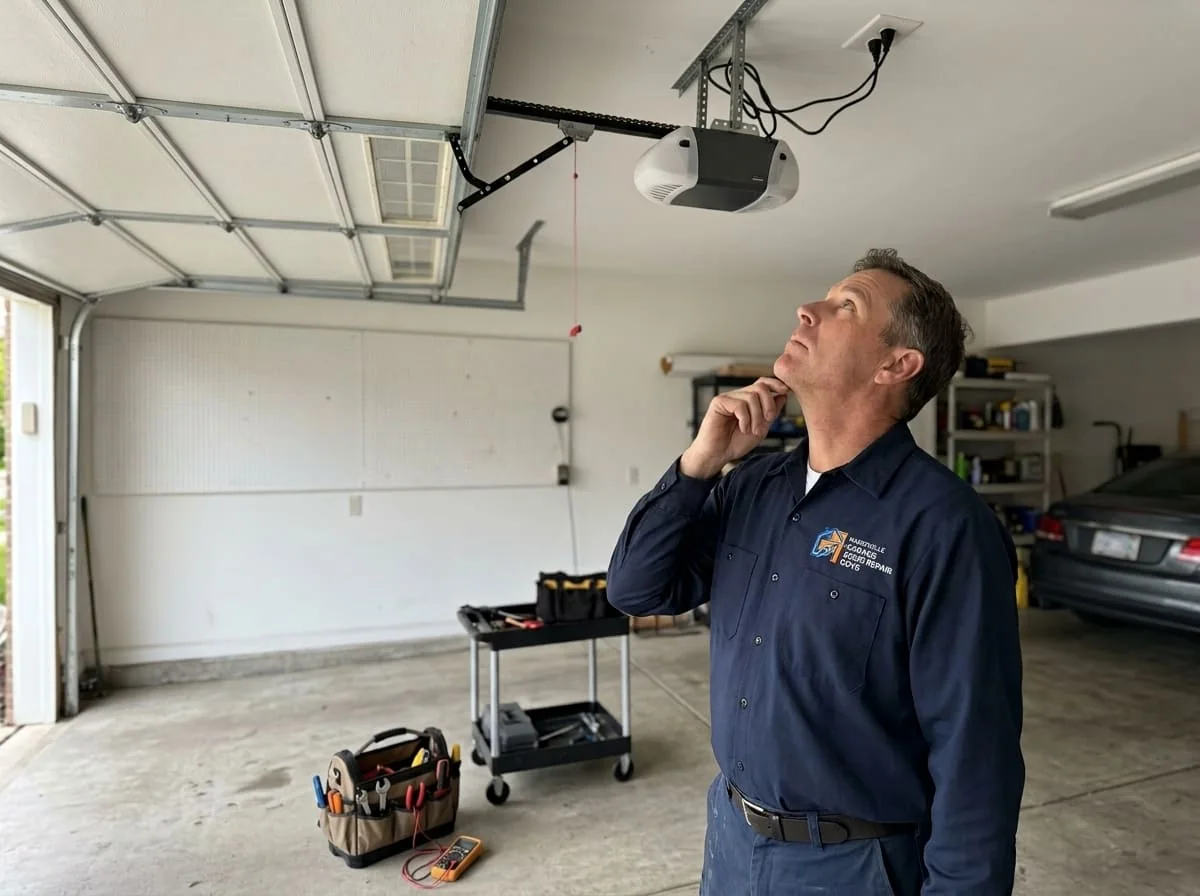
An opener does more than raise and lower your garage door. It carries the working load every time the door cycles, coordinates with the safety reversal sensors mounted near the floor, and — on most systems built in the last decade — talks to a rolling-code remote and a keypad or smartphone app. When an opener is undersized for the door it's lifting, or installed without the travel limits and force settings dialed in correctly, it wears out the drive mechanism early and can mask a door that isn't actually balanced right.
We install openers on both new door setups and as standalone replacements for a unit that's finally quit after years of service. Either way, the installation itself is only part of the job. Before we mount anything, we check the door's spring tension and balance by hand, because an opener fighting an unbalanced door will fail again regardless of how well it's installed. That diagnostic step is one a lot of quick opener swaps skip, and it's the difference between an opener that lasts and one that's back on the service calendar within a year.
Naperville's winters are part of this conversation too. Cold snaps thicken the lubricant in an opener's drive mechanism and make an aging motor strain harder to get moving on the first cold morning, which is often when homeowners discover the unit is done for good. We size replacement openers with that seasonal load in mind rather than just matching whatever was there before.
Signs You Need a New Opener, Not Another Repair
Most homeowners call us after noticing one of a handful of patterns. The opener runs louder than it used to, grinding or humming before the door moves. The door reverses partway through closing for no obvious reason. The remote works inconsistently, or only from a few feet away. Or the motor runs but the door doesn't move at all, which usually means the drive gear or belt has stripped internally.
A repair can fix some of these issues, especially if the opener is only a few years old and the problem is a worn sensor or a drive gear replacement. But once an opener is old enough that parts availability gets thin, or it's failed more than once in a short span, installing a new unit is usually the more honest recommendation — and we'll tell you plainly which situation you're in rather than defaulting to whichever job pays more.
- Grinding, humming, or clicking sounds before the door starts moving
- Door reverses or stops partway through a cycle
- Remote or keypad response has become unreliable
- Visible cracks in the housing or a chain that's sagging noticeably
- Opener is old enough that the manufacturer no longer supports replacement circuit boards
How Opener Installation Works
Garage door openers come in a few drive styles, and the right one depends on your door's weight, your garage layout, and how much you care about noise. Chain-drive units are the most common and most affordable option, pulling the trolley along a metal chain. Belt-drive openers use a reinforced rubber belt instead, running noticeably quieter — a real consideration if there's a bedroom above or next to the garage. Screw-drive openers use a threaded steel rod and need less adjustment over time. Wall-mount jackshaft openers skip the overhead rail entirely, mounting beside the door instead, which is useful for garages with high ceilings, storage lifts, or minimal headroom above the door track.
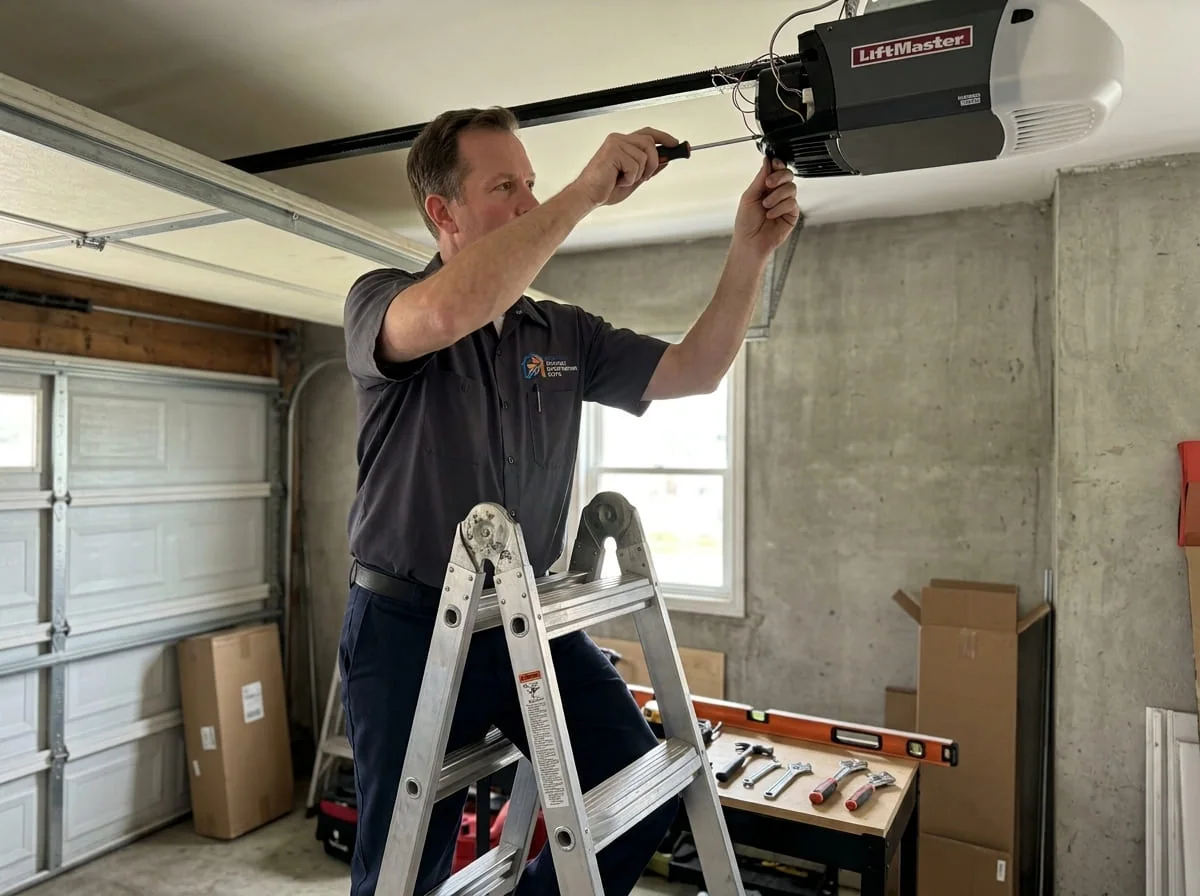
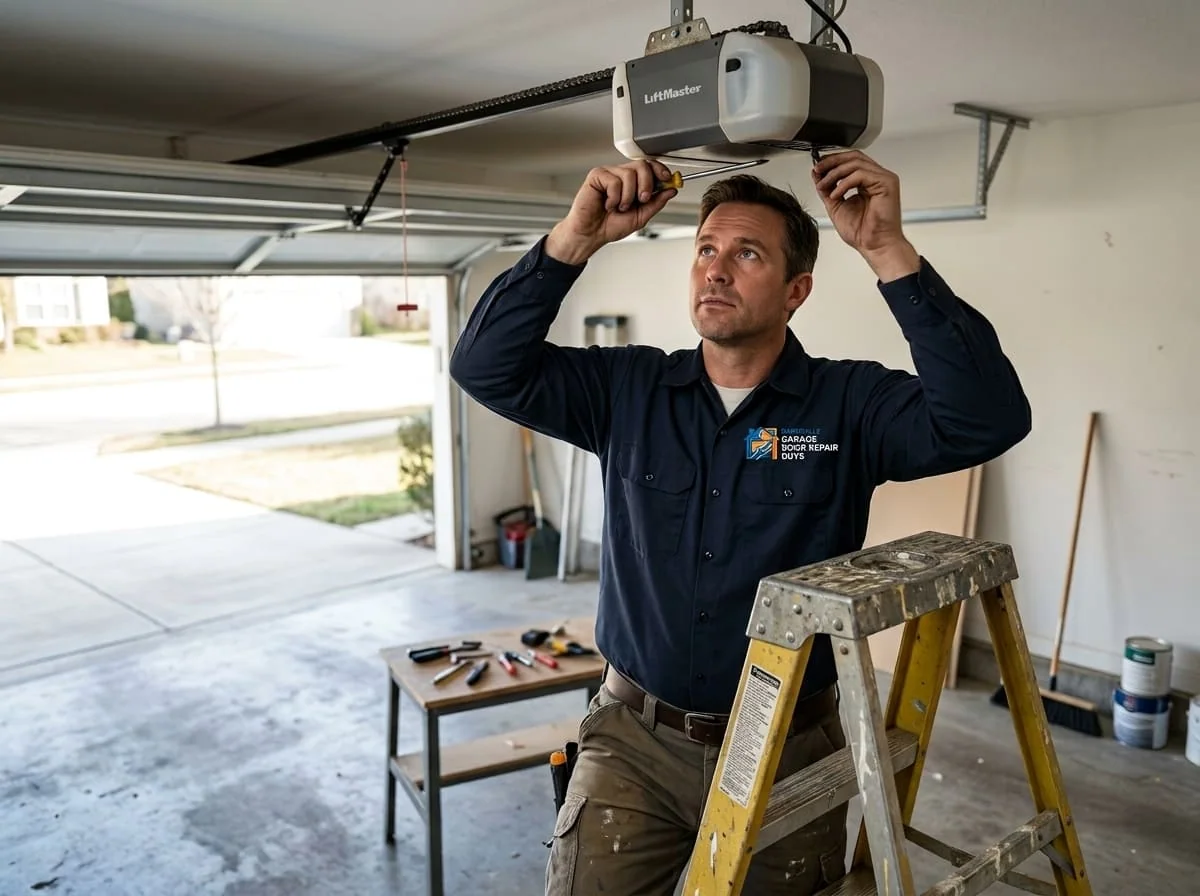
Once we've matched the drive type to your situation, installation involves mounting the rail and motor unit, connecting the trolley to the door's top panel with the correct arm bracket, wiring the wall control station and safety sensors, and programming the remotes and keypad. We set the up and down travel limits and the force sensitivity by hand rather than trusting factory defaults, since every door's weight and balance is slightly different.
The safety sensors are non-negotiable. Federal law has required photo-eye reversing sensors on residential garage door openers since 1993, and we align and test them on every install so the door reverses reliably if something — or someone — is in its path.
Why DIY Opener Installation Is Riskier Than It Looks
An opener installation looks straightforward from a video tutorial, but the parts that actually matter are easy to get wrong without experience. Mounting the rail bracket even slightly off-angle puts uneven stress on the header wall. Misjudging the force setting can leave a door that closes with enough force to injure a child or pet, or one so weak it won't seal against wind. And because the opener connects mechanically to the door's own spring and cable system, any existing balance problem gets transferred straight into the new unit's motor, shortening its life dramatically.
There's also a genuine injury risk. The header bracket install happens overhead, near an extended ladder, next to a door under spring tension — not a combination worth cutting corners on to save a service call.
How Naperville Winters Affect Opener Choice and Longevity
Chicago-area winters push garage door openers harder than most homeowners expect. Cold air thickens the grease in an aging motor's gearbox, so a unit that's already marginal often fails on the first genuinely cold morning of the season rather than gradually. Freeze-thaw cycles can also shift a concrete slab or garage frame slightly over years, which throws off door alignment and makes an opener work harder than its rated duty cycle assumes.
We factor this into which drive type and horsepower-equivalent unit we recommend for Naperville homes, particularly for taller or heavier insulated doors that see more resistance in cold weather. It's also worth scheduling a fall opener check before winter arrives, since a unit on its way out almost always shows warning signs — slower travel time, occasional stalling — before it fails completely.
What's Included With Every Installation
Every opener install includes programming the remotes, wall control, and any keypad or smart-home connection you use, plus a full safety sensor alignment and force-setting check. We test the door through several full cycles before we consider the job finished, not just one open-close pass.
We also walk you through the manual release cord and how to disconnect the opener by hand in a power outage — a step that surprises people the first time they need it, and one we'd rather you know before an emergency than during one.
Why Choose Naperville Garage Door Repair Guys for Opener Installation
Pete Voss has been installing and repairing openers across Naperville and the western suburbs since founding the company in 2012, and the crew follows the same approach on every job: check the door's balance first, recommend the opener that actually fits the situation, and explain the settings before we pack up. We're locally owned and operated, our technicians are insured and background-checked, and we offer upfront, honest pricing with a free quote before any work begins.
We also schedule same-day appointments where possible, because a dead opener usually means a car stuck in or out of the garage, and that's not a problem that should sit on hold for a week.
What to Expect When You Call
Diagnose and quote
We check the door's balance, spring tension, and current opener, then recommend the right drive type and give you an upfront, honest quote before starting any work.
Remove the old unit
We disconnect and remove the existing opener, inspecting the header bracket and wiring for anything that needs to be addressed before the new unit goes in.
Mount and wire the new opener
We install the rail and motor, connect the trolley arm to the door, and wire the wall control station and safety sensors.
Set limits and safety sensors
We set the travel limits and force sensitivity by hand and align the photo-eye safety sensors so the door reverses reliably if it meets an obstruction.
Program and test
We program your remotes and keypad, then run the door through multiple full cycles and walk you through the manual release before we leave.
Garage Door Opener Installation in Naperville, IL FAQs
How much does garage door opener installation cost?
Cost depends on the drive type you choose, whether your door's balance needs adjustment first, and any wiring or bracket work the install requires. We provide a free, upfront quote before starting any work, so there are no surprises on the bill.
Can I install a garage door opener myself?
It's possible, but mounting the header bracket correctly, setting safe force limits, and aligning the safety sensors are easy to get wrong without experience, and mistakes can mean real injury risk or a door that doesn't reverse properly. Most homeowners find it's worth having it installed and safety-tested professionally.
How long does a garage door opener installation take?
A standard installation on an existing door typically takes a couple of hours, including programming remotes and testing the safety sensors. It can take longer if the door's balance needs correction first or if wiring for the wall control needs updating.
Do I need a permit to replace a garage door opener in Naperville?
Swapping an opener on an existing garage door typically doesn't require a separate permit, but rules can vary depending on your specific situation. We recommend confirming with the City of Naperville's Permits & Licenses division if you have any doubts.
What size opener does my garage door need?
The right opener depends on your door's weight, height, and material, not just the size of your garage opening. We measure and check the door's balance on-site so we can recommend a unit that's actually matched to the load it needs to lift, rather than guessing.
Will my old garage door remotes work with a new opener?
Usually not, since most current openers use rolling-code technology for security that isn't compatible with older remote systems. We include programming new remotes and keypads as part of every installation.
How often should a garage door opener be replaced?
There's no fixed schedule, but most openers last somewhere in the range of ten to fifteen years of regular use before the motor or drive mechanism starts to wear out. Cold winters and heavy daily use can shorten that, so slower travel time or occasional stalling are worth having checked sooner rather than later.
Need Garage Door Opener Installation in Naperville, IL?
Naperville Garage Door Repair Guys is ready to help — call now for a free, upfront quote.