
Torsion vs Extension Springs: What's Actually Holding Up Your Garage Door
Torsion and extension springs both counterbalance a garage door's weight, but they store energy differently and fail differently. Here's how to tell them apart and what that means for repair.
Why Garage Doors Need Springs At All
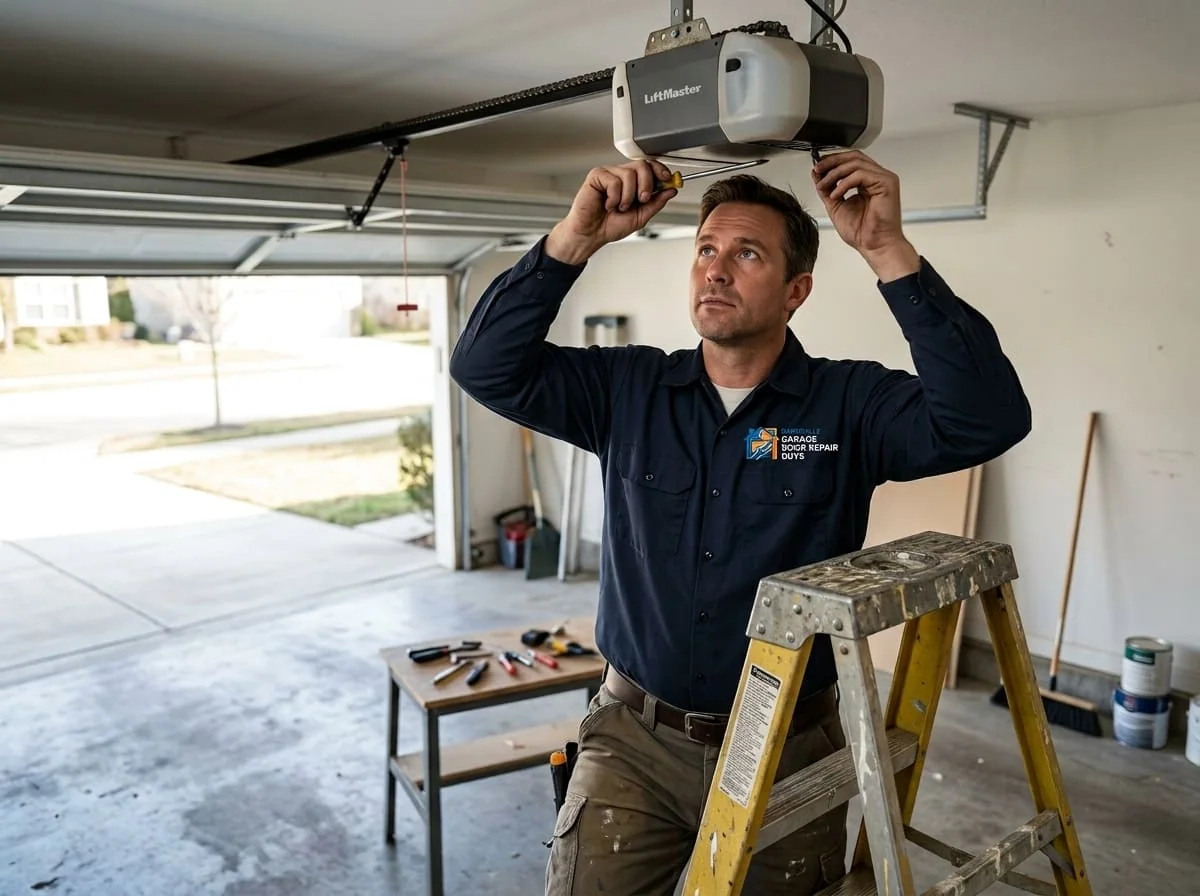
A standard two-car garage door weighs somewhere between 130 and 250 pounds, and an insulated wood-look door can run heavier still. Nothing about the opener motor bolted to your ceiling is built to lift that much weight on its own — openers are designed to nudge a properly balanced door, not haul a dead weight up a track. The springs are what actually do the lifting. They store mechanical energy while the door is closed and release it gradually as the door rises, so that by the time the opener takes over, the door is close to weightless in your hand.
That single job — storing and releasing energy in a controlled way — gets done by one of two fundamentally different systems: torsion springs mounted horizontally above the door, or extension springs stretched along the horizontal tracks on either side. Homeowners often don't think about which one they have until a spring lets go, and at that point the difference matters a lot, both for what the repair looks like and for how dangerous the failure is.
How Torsion Springs Work
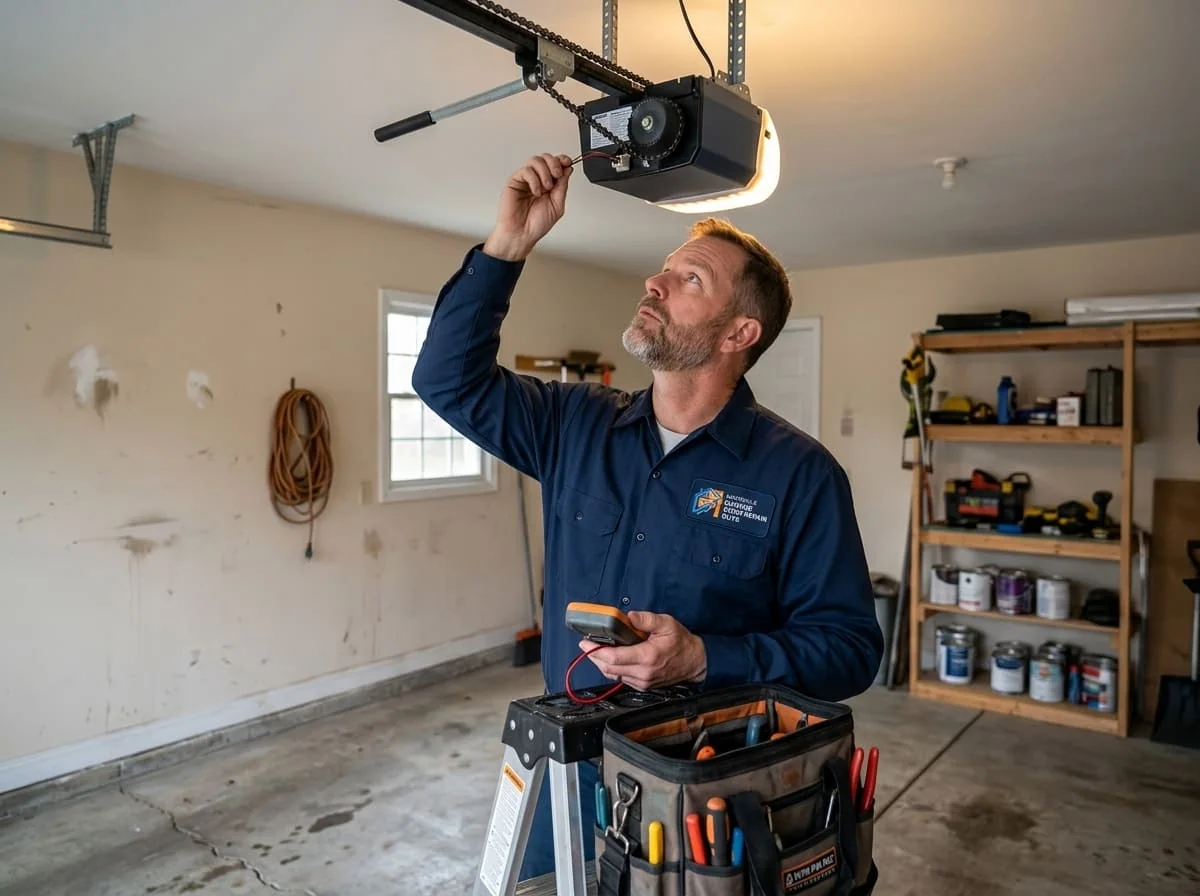
Torsion springs sit on a steel shaft that runs horizontally above the closed door, usually mounted to a header bracket centered over the opening. One or two springs (most double-car doors run two, mounted side by side) wind and unwind around that shaft as the door moves. When the door closes, cables attached to the bottom corners pull drums at each end of the shaft, which winds the spring tighter and loads it with torque. As the door opens, the spring unwinds and that stored torque turns the shaft, which turns the cable drums, which lifts the door.
Because the spring is wound under tension even at rest, torsion springs require a winding bar and a specific, methodical process to adjust or replace safely — there's no way to relax a wound torsion spring gradually by hand. That stored torque is exactly what Pete Voss, our owner, saw go wrong early in his career: a homeowner attempted a DIY torsion spring adjustment that ended with a trip to the emergency room, and it's the reason our whole team still treats every torsion spring job with the same by-the-book caution, no exceptions and no shortcuts. Most residential sectional garage doors installed in the last couple of decades use torsion systems, largely because they balance more precisely and put less strain on the tracks and rollers over time.
How Extension Springs Work
Extension springs work on the same principle in reverse. Instead of winding around a shaft, they stretch along the horizontal tracks, one on each side of the door, and are anchored to the back of the track on one end and to a pulley-and-cable system near the header on the other. As the door closes, a cable pulls the spring and stretches it, storing energy the same way pulling back a rubber band does. As the door opens, the spring contracts, pulling the cable and lifting the door through a pulley system.
Extension spring setups are common on older garages and on some detached or single-car garages where headroom above the door is limited, since they don't need the centered horizontal shaft and header bracket a torsion system requires. They're mechanically simpler and historically cheaper to manufacture, which is part of why so many houses built before the 1990s still have them. The tradeoff is that a stretched spring under load has nowhere to go but toward the ceiling or across the garage if it snaps or slips off its anchor — which is exactly the problem safety cables were introduced to solve.
Torsion vs Extension: Side-by-Side
| Factor | Torsion Springs | Extension Springs |
|---|---|---|
| Mounting location | Horizontal shaft above the closed door | Stretched along tracks, one on each side |
| How it stores energy | Winds and unwinds around a shaft (torque) | Stretches and contracts (tension) |
| Typical door balance | More precise, smoother lift | Can feel jerkier as springs age and stretch unevenly |
| Failure behavior | Shaft stays largely contained by end bearing plates | Spring can fly off track without a safety cable |
| Common on | Most doors installed in the last 20-25 years | Many older garages and some single-car setups |
| Typical service life | Rated in open/close cycles, commonly 10,000-20,000+ depending on wire size and door weight | Generally shorter cycle life for a comparable door weight |
Neither system is inherently the wrong choice for a given garage — plenty of extension spring setups run for years without incident when they're properly maintained and equipped with safety cables. But if you're building new or replacing a door outright, torsion is the more common recommendation today because of how evenly it balances the door and how much less wear it puts on rollers and tracks over thousands of cycles.
The Safety Gap Between the Two Systems
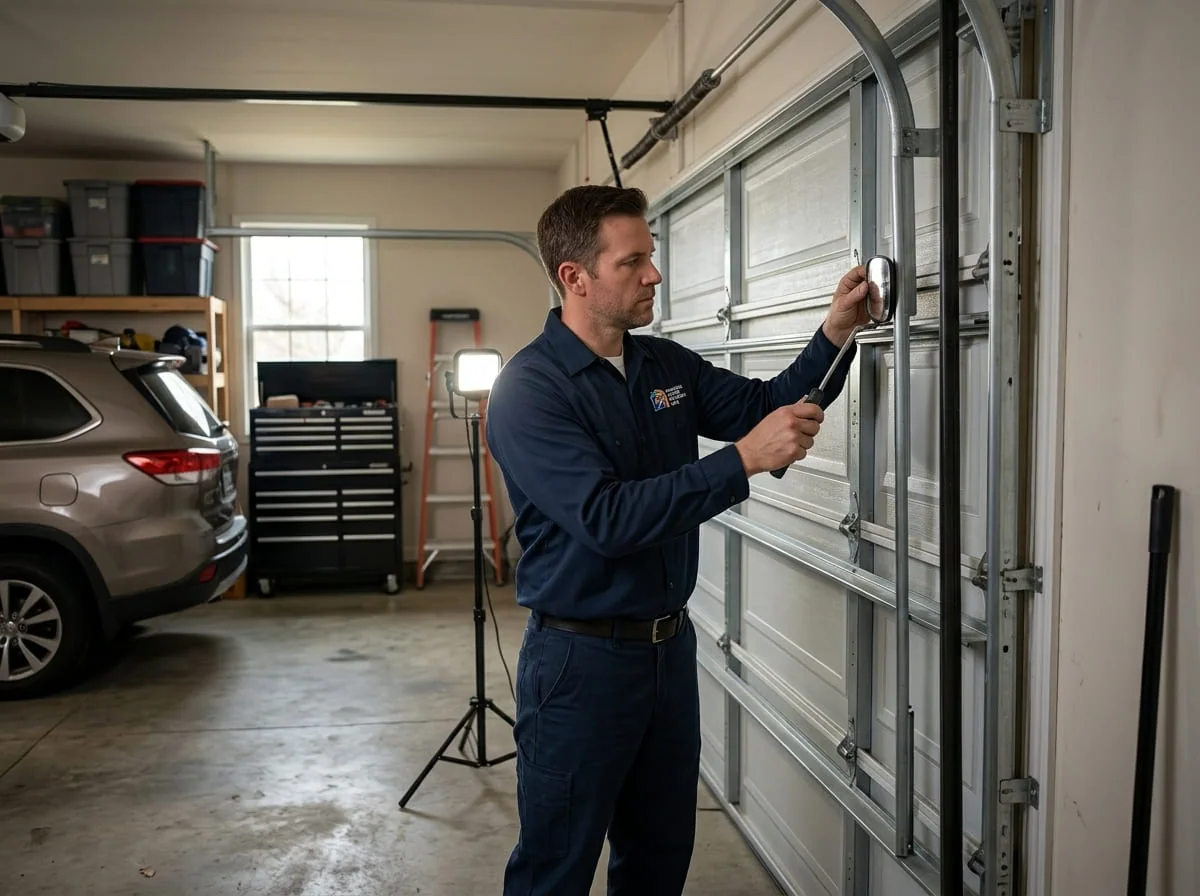
This is the part worth taking seriously regardless of which system your door has. The U.S. Consumer Product Safety Commission has specifically flagged extension springs as a hazard when they're installed without safety cables — a length of cable run through the center of the spring and anchored independently, so that if the spring itself snaps, the cable keeps the broken pieces from launching across the garage. A spring under full extension tension that fails without a containment cable can travel with real force, and it has caused documented injuries and property damage over the years, which is why containment cables are now standard practice on any code-compliant extension spring installation.
Torsion springs carry their own risk, but it's a different kind. The shaft is supported by bearing plates at each end and the springs are contained along it, so a snapped torsion spring is far less likely to become a projectile. The danger with torsion springs is almost entirely in the winding and unwinding process itself — the stored torque in a fully wound spring is enough to seriously injure someone who doesn't use the right winding bar, the right technique, or who assumes a spring is safe to touch just because the door looks closed. Either way, spring work is not a place to improvise. If you ever notice a garage door spring that looks stretched, gapped, rusted through, or separated at all, treat the door as inoperable until a technician looks at it, and never try to open it by hand or force it with the opener.
- If you have extension springs without visible safety cables running through them, that's worth a call regardless of whether anything looks broken yet.
- Never attempt to adjust, wind, or unwind a torsion spring yourself — this is true even for people who consider themselves handy.
- If a spring snaps while the door is open, do not stand under the door or attempt to close it manually. Call for service.
How to Tell Which One Your Garage Door Has
You can usually identify the system in under a minute without touching anything. Open the garage door and look straight up above the opening, at the header area right where the door meets the ceiling track. If you see a single solid steel shaft running horizontally across the full width of the door, with one or two coiled springs wound around it, that's a torsion system. If instead you see long springs stretched out along the horizontal tracks above each side of the door, running roughly parallel to the ceiling and connected to pulleys and cables near the back wall, that's an extension system.
A few other clues line up with this. Extension spring doors are more common in garages with limited headroom, since torsion systems need clearance for the header-mounted shaft and its center support bracket on wider doors. If your garage was built before the early 1990s and hasn't had the door or springs replaced since, extension springs are a reasonably safe bet, though plenty of exceptions exist. If you're not sure after looking, a photo sent to a technician is usually enough for us to confirm before a truck even rolls.
Why Naperville Winters Are Hard on Both Types
Illinois winters are genuinely tough on garage door springs, and the mechanism is the same whether you're running torsion or extension. Steel contracts as temperatures drop, and a January cold snap with highs near 30°F and overnight lows near 16°F puts real stress on a spring that's already fatigued from thousands of open-close cycles. A spring near the end of its rated cycle life that might have held on through another mild winter can lose just enough flexibility in a hard freeze to snap on an ordinary morning, often on the coldest day of the week when everyone least wants to be stuck dealing with it.
Cold weather compounds other problems too. Metal tracks contract slightly and can bind against rollers that have gone stiff or brittle in the cold, especially nylon rollers on older doors. Opener lubricant thickens, which makes the opener strain harder against a door that isn't balancing smoothly — and a door with a fatigued spring puts more of that lifting burden directly on the opener's gears and drive system. Freeze-thaw cycles can also shift a concrete slab or garage floor slightly over years, which throws off track alignment and adds friction the spring has to work against on every cycle. None of this is unique to torsion or extension systems specifically, but it's a big part of why late fall is a smart time to have springs inspected before the first real cold snap arrives.
Repair, Replacement, or Conversion?
When a spring fails, the repair almost always means replacing that spring (or, for torsion systems with two springs, often both at once, since a second spring of similar age is usually close behind the first one). Spring wire is rated in cycles under ANSI/DASMA 102 and related DASMA technical standards, and once one spring on a matched pair has reached the end of that rated life, the other is typically not far behind — replacing both at the same visit avoids paying for a second service call within a matter of months.
Some homeowners with an older extension spring system ask about converting to torsion when the time comes for a new door or a major repair. It's a legitimate option and one we'll walk through honestly: torsion systems generally balance more evenly, put less wear on tracks and rollers, and don't carry the same containment-cable considerations extension springs do. But conversion isn't free — it usually requires adding a center support bracket and header mounting hardware that a lot of older garages weren't built with, so it makes the most sense as part of a larger door replacement rather than a standalone spring swap. We'll always tell you plainly whether a straightforward like-for-like spring replacement is the more sensible move for your situation, and we provide a free upfront quote before any work begins either way.
Keeping Whichever System You Have Running Longer
Spring life comes down to cycles, not calendar years, so anything that reduces unnecessary opening and closing helps. A few habits genuinely extend service life on either system. Avoid leaving the door open for long stretches in bad weather, since that keeps a torsion spring under sustained load and exposes an extension spring's steel to more temperature swings while stretched. Keep an eye on visible rust, especially after a wet fall or a winter with a lot of road salt spray tracked into the garage, since rust weakens wire strength well before a spring looks obviously damaged. And have the whole system looked at yearly, ideally before winter — a technician can check spring tension, look for gaps between coils, inspect cables and pulleys on extension systems, and catch a spring that's close to its end before it fails on a Tuesday morning when you're already running late.
If you're ever unsure which system you have, whether a spring looks right, or whether a repair estimate makes sense, that's exactly the kind of question we'd rather answer over the phone or with a quick photo than have you guess at.

Pete Voss
Owner and lead technician at Naperville Garage Door Repair Guys, serving Naperville, IL since 2012.
FAQs
Can I replace a garage door spring myself?
We strongly recommend against it, especially for torsion springs. A wound torsion spring stores enough force to cause serious injury if the winding bar slips or the wrong technique is used, and it's exactly the kind of job that looks simple until it isn't. Extension springs carry less winding risk but still require the door to be properly secured and the tension released safely before anything is disconnected. This is a job for a trained technician with the right tools every time.
How much does it cost to replace a garage door spring?
Cost depends on factors like whether you have torsion or extension springs, whether one or both springs need replacing, the door's weight and cycle rating, and whether cables, rollers, or drums need attention at the same time. We don't publish blind estimates because those factors vary door to door, but we provide a free, upfront quote before any work starts so you know exactly what you're paying for.
How long do garage door springs last?
Springs are rated in open-close cycles rather than years, per DASMA technical standards, and a typical torsion spring on a residential door might be rated anywhere from around 10,000 to 20,000 cycles or more depending on wire gauge and door weight. For an average household opening the door a few times a day, that often works out to somewhere in the 7-to-12-year range, though heavy daily use, corrosion, or a harsh winter can shorten that considerably.
Is it dangerous if my garage door spring breaks?
A broken spring on its own is usually not dangerous if the door is closed and left alone, but it makes the door unsafe to operate. Never try to force a door open manually or with the opener after a spring breaks, since the counterbalance is gone and the full weight of the door is unsupported. Extension springs without safety cables pose an added risk of the broken spring itself moving with force, which is why the CPSC recommends containment cables on every extension spring installation.
Which is better, torsion or extension springs?
Torsion springs generally balance the door more evenly, put less strain on rollers and tracks, and have a somewhat more contained failure mode since the spring stays along a supported shaft. That's why most doors installed over the past couple of decades use torsion systems. Extension springs aren't unsafe when properly installed with safety cables and maintained, but if you're replacing a door outright, torsion is usually the stronger long-term choice.
How do I know if my garage door has torsion or extension springs?
Look above the closed door. A single horizontal shaft with coiled springs wound around it, centered above the opening, means torsion. Long springs stretched out along the tracks on either side of the door, connected to pulleys near the back, means extension. If you're still not sure, a quick photo is usually enough for one of our technicians to confirm before a visit.
Have a Garage Door Problem Right Now?
Skip the guesswork — call Naperville Garage Door Repair Guys for a fast, honest diagnosis.